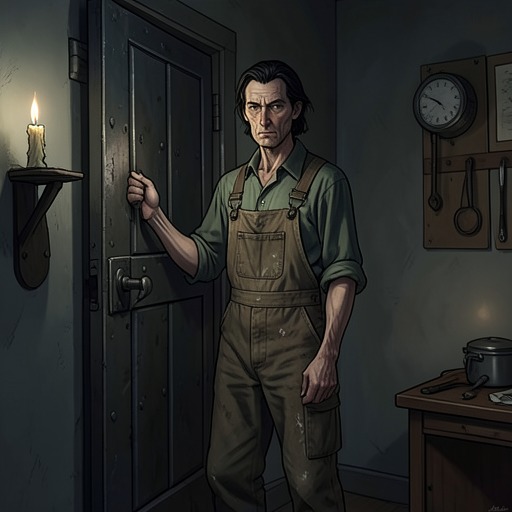
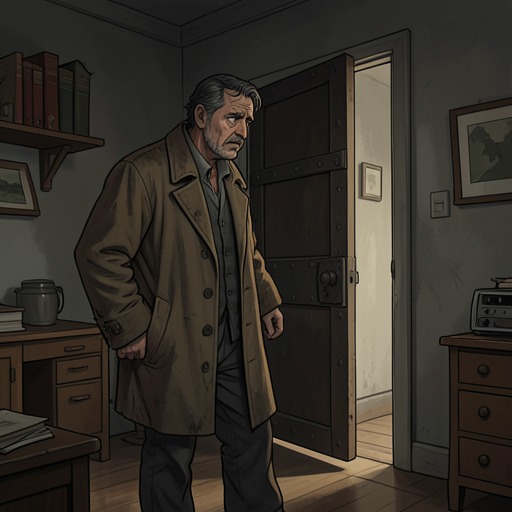
Mr. Micawber
David CopperfieldMr. Micawber is a debtor, husband, and eventual friend of the child David Copperfield, whose London household offers a sustained view of financial insecurity in everyday life. His grand language and alternating despair and hope make his troubles comic in their presentation, but they do not cancel their consequences: creditors pursue him, his family lives with scarcity, and he is imprisoned for debt. Through his dealings with David, the narrative also distinguishes a person in financial distress from the obligations and legal machinery that surround him.
Identity and Household
Mr. Micawber enters David Copperfield’s life when Mr. Quinion introduces him as a man known to Mr. Murdstone. He takes commission orders for the firm when he can obtain them and, after receiving word from Mr. Murdstone, agrees to lodge the young David in an unoccupied room at the rear of his house. The arrangement is practical, but it places David inside a household already struggling to meet its expenses.
Mr. Micawber’s work is irregular. He is described as a town traveller for several miscellaneous businesses, and his earnings appear inadequate to his obligations. His wife, Mrs. Micawber, speaks openly to David about the family’s difficulties. The large brass sign announcing her boarding establishment for young ladies suggests an attempted source of income, but David never sees a pupil, a prospective pupil, or preparations for one. In practice, the visitors he observes are creditors.
The household’s distress is punctuated by sharp changes of mood. Creditors call and demand payment; Mr. Micawber is overcome by mortification, while Mrs. Micawber can be shaken by an unpaid tax and later rally over a meal and stories of her parents. Their circumstances are not simply a matter of empty cupboards: they involve unstable earnings, mounting claims, and repeated attempts to keep ordinary family life going. Mr. Micawber’s ornate self-presentation persists alongside this insecurity, creating a contrast between the dignity he claims and the precariousness of the household he must support.
Debt and Everyday Survival
The Micawbers’ debts shape David’s first experience of independent life. While working all day at Murdstone and Grinby’s warehouse, he provides his own breakfast and keeps a small loaf and cheese for supper. He must make six or seven shillings last through the week, without adult counsel or assistance. When money runs short in the Micawber household, David offers Mrs. Micawber the two or three shillings he has saved. She refuses to take the coins as a loan, but asks him to help in another way.
That help includes selling the Micawbers’ books at a bookstall and taking other possessions to a pawnbroker. The transactions bring in small amounts, and Mrs. Micawber sometimes marks the work with a modest shared supper. David’s aid is not a solution to the family’s financial position, but it makes him an active participant in its effort to get through immediate shortages. His youth makes the arrangement striking: he is himself poorly paid and responsible for his own meals, yet he contributes labor and savings to another household.
The story sets legal claims beside this improvised domestic economy. Mrs. Micawber tells David that her husband’s creditors cannot obtain money from him when none is available, while their repeated visits make clear that inability to pay does not end the demands. When Mr. Micawber is arrested, his financial crisis moves from the home into the debtors’ prison system. The narrative’s attention to the small resources being sold, pawned, or lent gives the arrest a household context rather than presenting it as an isolated legal incident.
Imprisonment and the Language of Hope
Mr. Micawber is taken to the King’s Bench Prison early one morning. On his departure he speaks as if his prospects have collapsed, and David believes that his heart is broken. Yet Mr. Micawber is later seen playing skittles before noon. The quick shift does not erase his distress; it establishes the rhythm by which he meets it, passing from elaborate despair to activity and renewed composure.
When David visits him in prison, the two go to Mr. Micawber’s room and cry together. Mr. Micawber urges the boy to learn from his experience, explaining that a person whose spending stays below his income can be happy, whereas spending even a little more produces misery. The lesson is a plain statement of financial restraint from someone who has failed to keep his own accounts in order. Its force lies in that contradiction: Mr. Micawber can articulate a rule for stability while living through its opposite.
The prison does not make him idle. He becomes an authority in its club and writes a petition to the House of Commons seeking a change in the law of imprisonment for debt. The project reflects his characteristic energy: he can devote himself to a cause and organize others even when his personal finances remain unresolved. In time, he is ordered to be discharged under the Insolvent Debtors Act. His creditors are not portrayed as uniformly implacable; even a bootmaker who had pressed him for payment says in court that he bears no malice but wants money owed to him. Mr. Micawber returns to the prison temporarily to settle fees and formalities, and the club marks the prospect of his release with a celebratory meeting.
Friendship with David Copperfield
The relationship between Mr. Micawber and David develops beyond the original lodging arrangement. David spends his leisure time with the family and helps Mrs. Micawber during a period of acute want. When the two households are about to separate, Mrs. Micawber tells him that she will remember him whenever she thinks of her husband’s difficulties: in her view, he has not behaved like a lodger but like a friend. Mr. Micawber likewise praises David’s capacity to feel for people in trouble and to find ways of making use of whatever resources are available.
Their connection is reciprocal but unequal in age and circumstance. David is still a child, earning little and trying to manage his own existence; the Micawbers are adults whose household sometimes benefits from his work and small savings. Yet the narrative gives the relationship genuine warmth. The family’s final dinner together is marked by gifts from David to the children and by sadness at the coming separation. Mrs. Micawber’s recognition of his friendship acknowledges the care he has shown, while Mr. Micawber’s praise turns David’s practical assistance into a form of moral competence.
Mr. Micawber’s later dealings with David retain the same blend of formal language and personal attachment. At one crisis, David finds a letter in which Mr. Micawber announces that he is crushed, using the legalistic register he adopts when his affairs are especially desperate. The letter carries distress across the separation between them, and its elaborate phrasing makes a private appeal sound like a formal notice of failure.
Obligation and Character
Mr. Micawber’s conduct repeatedly places financial obligation beside moral intention. When he is preparing to leave London, he insists on acknowledging money that Thomas Traddles had put forward on his behalf through two bills of exchange. He calculates the amounts, asks David to check the total, and gives Traddles an IOU for the combined sum. The document is not payment, but Mr. Micawber treats issuing it as necessary to his moral standing: he does not want to leave without recognizing the debt. His insistence contrasts with his unreliable finances and shows that his self-dramatizing manner can coexist with a serious concern about what he owes another person.
This concern also clarifies the limits of the comic portrait. Mr. Micawber is not presented as financially dependable: he repeatedly falls into difficulty, relies on credit and the sale or pawning of possessions, and is unable to prevent his arrest. But the account does not reduce him to his failures. He cares for David, acts vigorously on behalf of a proposed legal reform, and recognizes obligations to Traddles even when he cannot discharge them in cash. His recurring hope that circumstances will improve is therefore both an evasion of present realities and a resource that helps him continue through them. Through that tension, Mr. Micawber connects private hardship to public institutions while remaining a vividly individual presence within David Copperfield’s recollections.